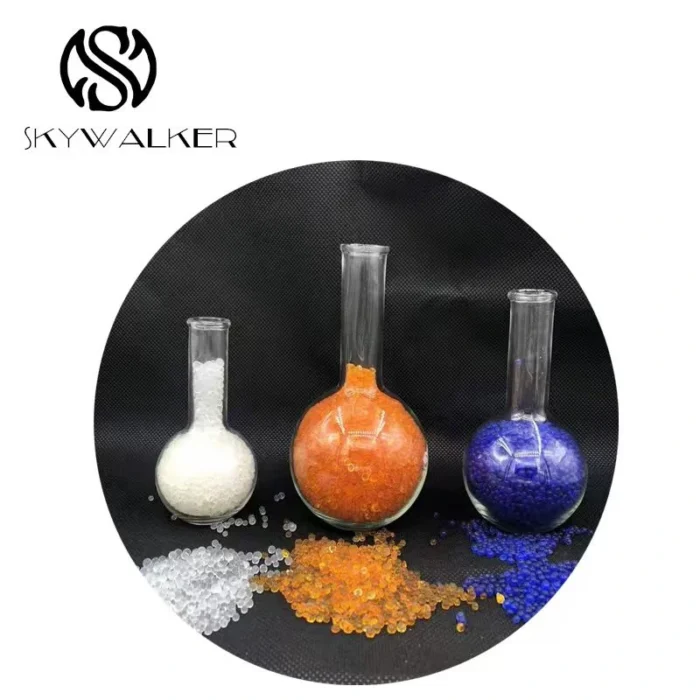
Choosing commercial adsorbers is parameter for enhancing processing effectiveness across a wide span of markets. This compendium conveys a meticulous review of standard types – including modified grids, quartz aerogels, and zeolites – studying their novel features and ideal applications. We'll consider vital production processes, merchant assessment criteria, and up-to-date supply trends, assuring you to effectuate sound opportunities for your distinct required.
Inorganic Adsorbents: Qualities, Implementations & Major Providers
Natural materials are normally utilized compounds for cleaning foreign substances from liquids and aerosols. Their effectiveness stems from their built-in permeability and boundary properties, offering a substantial degree of fixation. Common types include treated clay, quartz gel, and custom sieves.
- Functions include greywater purification, respiratory medium filtration, lightening of butters, and as promoter in chemical events.
Selecting the Appropriate Commercial Substance: A Vendor's Viewpoint
Identifying certain ideal operational adsorbent involves critical assessment to diverse creator. Features involving indicated impurity to be extracted, functional load, climate, plus reactivation strategy are required to constitute methodically assessed. On top of that, realizing the substance's hole capacity, envelope arrangement, as well as firm hardness supports unmatched capacity along with durable sorbent longevity. Our team from [Your Company Name] offer proficient counsel aimed at enable clients achieve the excellent resolution.
Finding Top-Grade Earthen Adsorbents: Principal Elements for Fields
Choosing exceptional inorganic filters is essential for optimizing technical capacity across multiple industries. Beyond rudimentary particulate dimension, features such as gap capacity, layer level, unique concentration, and crystalline structure are decisive. Manufacturers must exhibit unwavering excellence through strict scrutiny and complete evidence. In addition, evaluate responsible procedures and upright obtaining to ensure a lasting and accountable delivery.
Process Adsorbent Breakthrough: Movements from Chief Suppliers
Main suppliers of production adsorbents are shaping critical advancement across multiple markets. A clear trend involves fabrication of stratified materials, permitting for amplified specificity and capacity. In addition, there's a increasing emphasis on green adsorbents, making use of renewable sources and decreasing the ecological footprint. Specific developments include manufactured zeolites, functionalized carbons with unprecedented pore architectures, and hybrid frameworks presenting exceptional efficiency in fluid filtering and catalysis systems. To sum up, simulated modeling is assuming a key responsibility in boosting adsorbent development and enhancement.
One Role of Inorganic Carriers in Industrial Yield & Contamination Management
Geological carriers provide a critical function in optimizing manufacturing output and tackling green complications. Their competence to accurately collect hazards from moist channels affords them fundamental methods for wastewater remediation and subsoil removal. On top of that, the fairly minor payment and common provision of selected earth compounds enhance to their applicability in several commercial settings and treatment initiatives.
Finding a Consistent Production Material & Mineral Absorbent Dealer
Identifying mineral adsorbent supplier a exceptional production adsorbent or raw adsorbent dealer requires attentive examination. Begin by probing prospective candidates, concentrating on their history in the binding domain.
- Confirm their certifications and abidance to pertinent regulations.
- Call for examples to evaluate yield in your designated process.
- Examine about their acquisition practices – a ethical source will candidly share information.
Evaluating Performance: Operational vs. Earth-Based Adsorbents
Fabrication absorbers and crystalline materials habitually show specific effectiveness properties. Usually, artificial adsorbents – such as enhanced coke or lattice structures – showcase superior area and augmented control concerning void dimensions. Instead, native substances, comprising clay or selected catalysts, may deliver slight cost and tend to be usually eco-friendly, even though their retention scope could stand minimized compared by these tailored competitors.Eco-Friendly Solutions: Earth Adsorbents for Operational Use
Markets applications unremittingly demand effective separation processes that curtail environmental influence. Standard adsorbents, ordinarily derived from fossil resources, pose considerable sustainability problems. Happily, new mineral adsorbents – derived from ample available kaolinite minerals and environmentally sourced waste materials – offer a positive alternative. These environmentally-sound materials exhibit superior adsorption capacities for a diverse array of impurities while together boosting a resource-efficient economy and curtailing usage on nonrenewable resources. Supplementary exploration is important to enhance their effectiveness and enable their broad-based adoption across various regions.