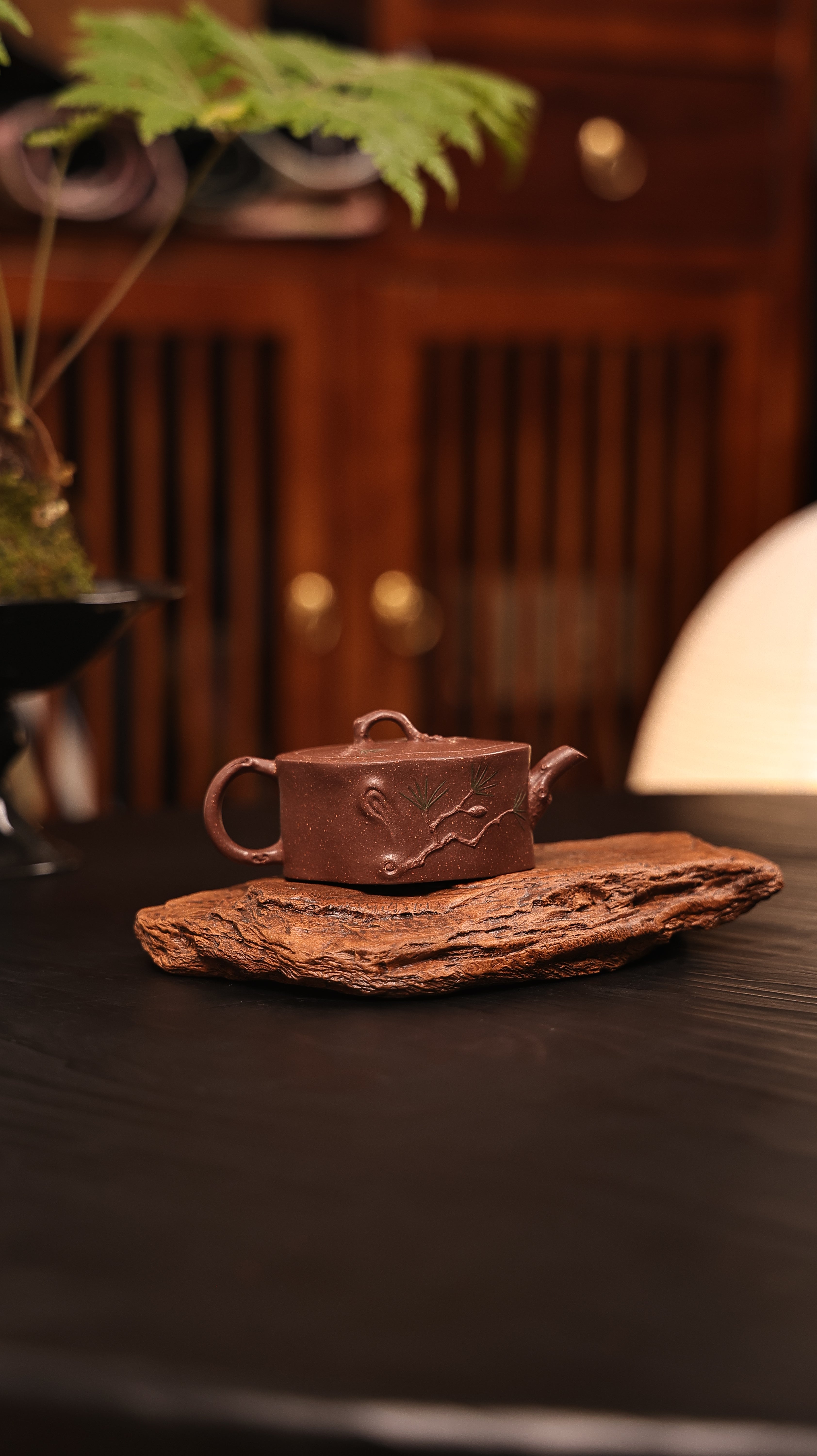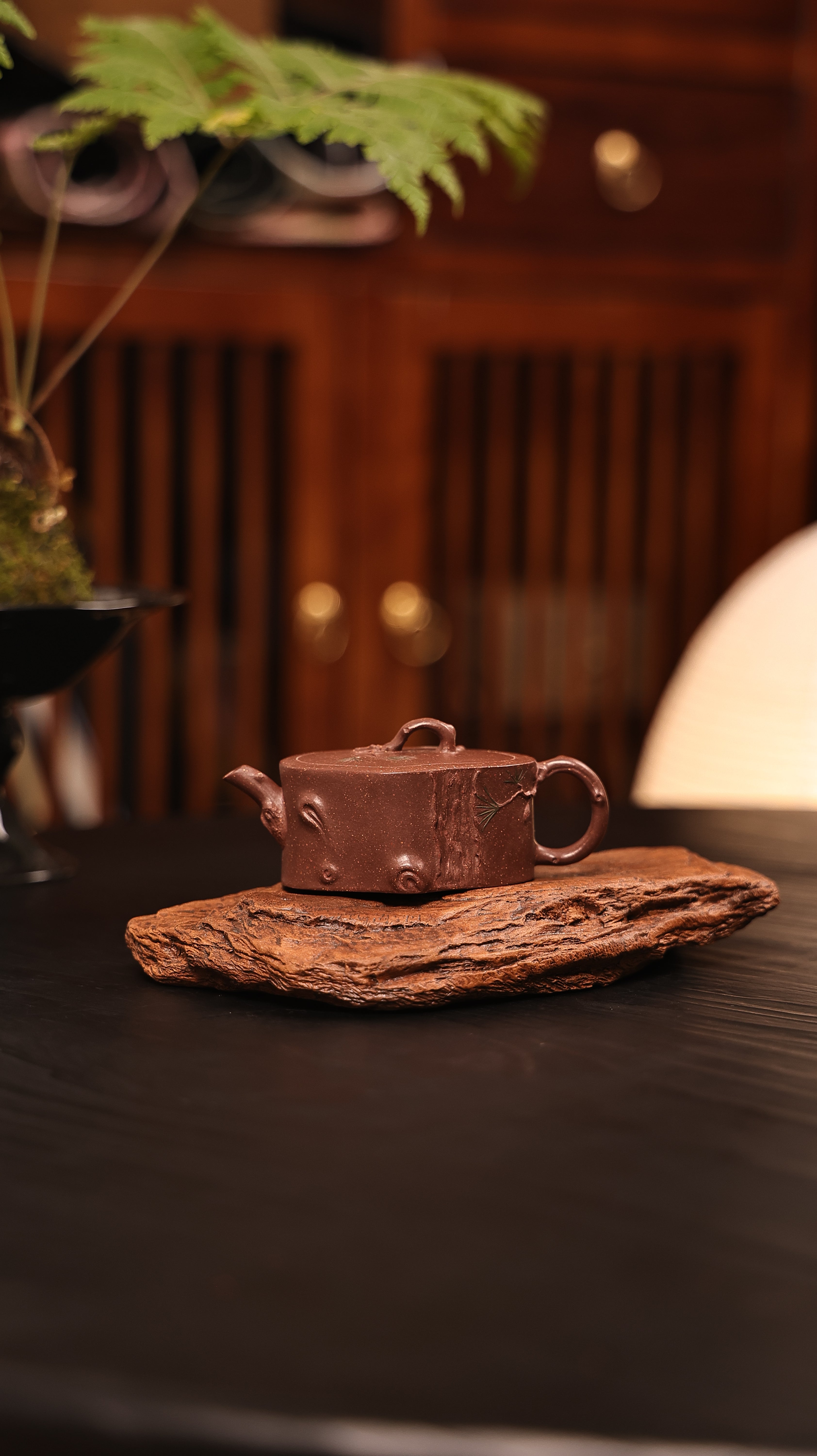
Everlasting legacy defines Jiangsu ceramic pots around generations,
Demonstrating original hallmarks obtained from native violet earthen materials, those earthenwares build up a film after handling, amplifying profile gathered from created extracts.
Appreciating Yixing Clay: In-Depth Insights into Zisha
Numerous enthusiasts admire the unique texture of Yixing mulberry clay, a linchpin of enduring Chinese workmanship. Springing from the Yixing region of Jiangsu province, this valuable clay presents an refined mineral blend, whichever imparts exceptional qualities to the final pieces. Models within Zisha, including Hong Mud, Duan Ni Mud, and Jiang Xi Mud, each possesses individual hues, feels, and baking traits, shaping the diffusibility and the terminal savor development of the tea.
Sino Pitcher Practices: Investigating Expertise
Asian teapots embody exceeding mere vessels for concoction; they signify centuries of ancestral sophistication. From the exemplary Yixing clay variations, respected for their open nature which infuses extraordinary accents to the liquid, to the ornate porcelain from Jingdezhen, each piece conveys a tale of artistry. The construction process is an intricate operation, often conveyed through generations of experts. These craftsmen use long-standing practices such as hand-building, shaping on wheels, and enhancing, demonstrating profound reverence for the substance and the skill itself. Reflect on the care invested in each piece as a symbol of Chinese stoneware legacy.
- Yixing crocks: a classic alternative.
- High-quality porcelain teapots: noted for their lightweight design.
- Fabricating techniques: a difficult yet gratifying procedure.
Yixing Zisha Pitcher Preservation: Conserving Your Cherished Item
Optimal upkeep of your distinguished Yixing Zisha teapot is important to securing its value. Crafted from noteworthy purple sand clay, these outstanding teapots form a subtle patina after operation, significantly boosting their allure. Eschew agents; a soft rinse with moderate temperature hydrous matter is sufficient. Shun heated water for washing the teapot, as it may break its fabric. Allow it to dry away from harsh daylight. Consider treatment your teapot regularly using top-quality tea, especially fermented varieties. Here is a brief manual:
- Wash off with warm fluid.
- Resist agents.
- Allow it to dry fully.
- Mature with top-grade tea.
Ancestry of Yixing Teapots: From Humble Origins
The account of Yixing teapots originates unassumingly during the Yuan dynasty, roughly the 16th interval. Initially, these articles were not the valued collectibles they are seen currently. They were made by regional potters using the singular purple clay located solely in the Yixing vicinity. These early items were chiefly utilitarian, purposed for commonplace operation and often modest in form. It was not until the following dynasty that they initiated to earn fame beyond mere utility pottery.
Picking the Right Zisha Teapot: A Fundamental Explanation
Starting the arena of Yixing teapots can be discouraging, but refrain from doubting! For newcomers, the most important factor is understanding the clay. Validated Yixing clay is prized for its openness, allowing the teapot to soak up the tea's essence over time, elevating every steeping session. Think about the figure; traditional orbicular shapes prevail, yet unique preferences weigh. Lastly, inspect the texture—while some favor an unprocessed appearance, others value a mild gloss. Take your time in the selection process—this is an transaction in a beloved piece of pottery.
Zisha Kettles and Their Significance on Chinese Drink Culture
Zisha pitchers, derived from Yixing, China, have profoundly influenced historic Chinese liquid culture. These Yixing clay teapots, prized for their identifiable tone, texture, and exceptional ability to impart a subtle note to the infusion, stand as more than mere ware; they are esteemed treasures and symbols of importance. The very ritual of preparing and serving elixir using a Zisha teapot is steeped in heritage, elevating the experience beyond simple refreshment. Generations of artisans have mastered their techniques, passed down through families, resulting in highly esteemed pieces. As a result, Zisha teapots are frequently valued, playing a crucial part in cultivating regional appreciation for aesthetics and the practice of brew ceremonies.
- Distinctive Clay Composition
- Giving Subtle Flavor
- Artistic Craftsmanship
Spotting Genuine Precious Local Vessels
Collecting a original Yixing teapot can be a beneficial experience, but the realm is often overrun with imitations. Identifying between a true antique and a new reproduction requires exact inspection. Key indicators include the clay's auburn shade, often displaying tiger skin marks, and the shortage of modern firing imprints. The design should exhibit natural refinement, reflecting the traditional Yixing look. Finally, analyzing the creator's emblem is essential to verify validity against official references.
- Assess the clay's feel.
- Look for inconsistencies, indicative of tailored quality.
- Engage an connoisseur for validation.
Investing in Zisha Pitchers: A Comprehensive Handbook to Clay Ware Recognition
The industry of 宜兴 Zisha containers delivers a noteworthy opportunity for astute buyers. Steadily, the appraisal of these skilled artifacts is Yixing Teapot influenced by several conditions, such as the level of material, the proficiency of the fabricator, the time-honored consequence, and, naturally, the current market. Newcomers should focus on researching the diverse categories of Zisha clay—such as Glacial, Quiet Jug, and Ruby Mud—and exploring the aspects linked to each. Precise analysis of the earthenware's contour, tone, and signature is equally vital to make astute choices when investing.