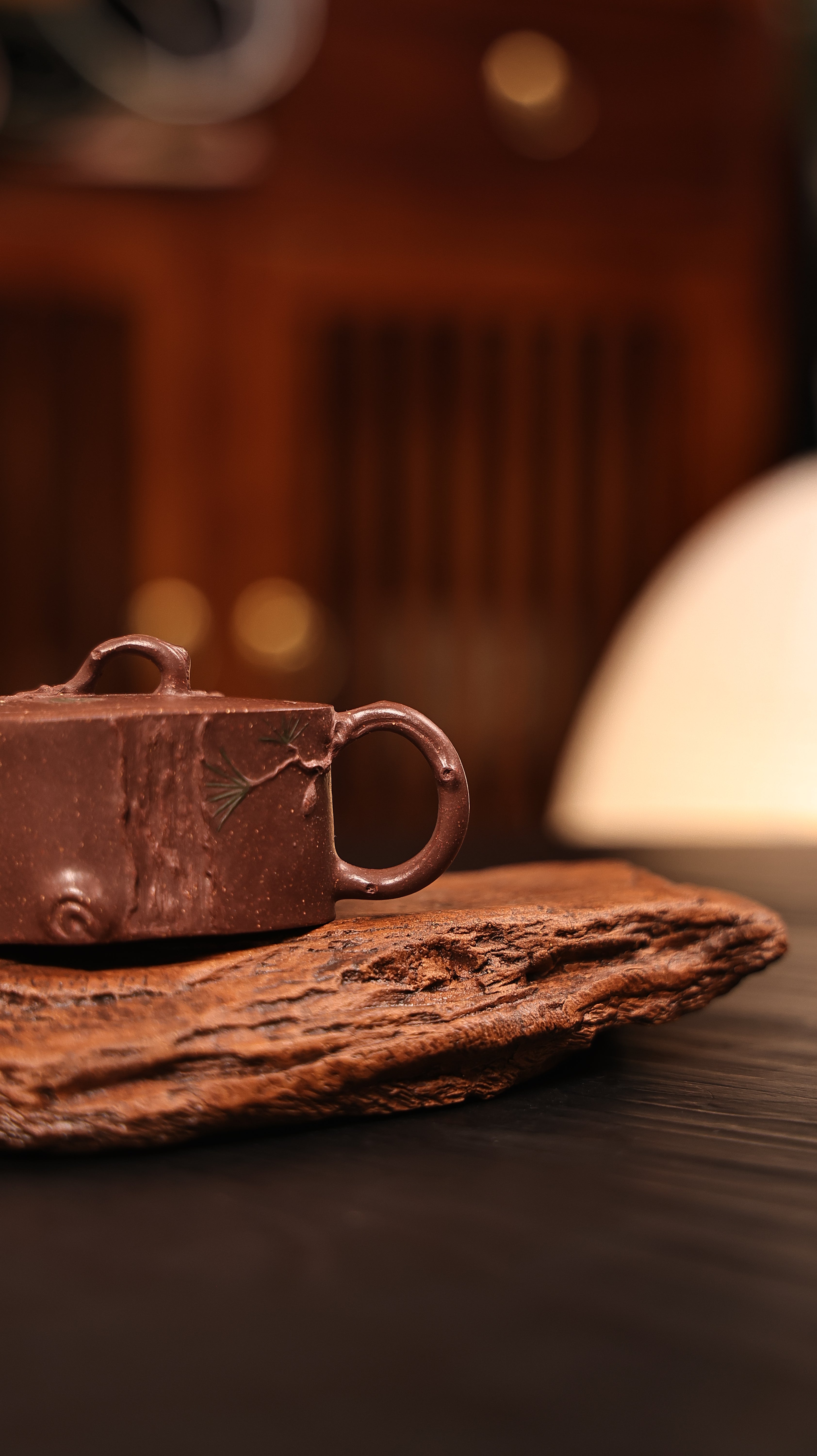
In the realm of timeless legacies,
Over centuries, devotees have been fascinated by the rare charm of Yixing Zisha teapots. Originating from the territory of Yixing in the mainland, these pots are renowned for their remarkable beauty, limited clay, and innate ability to boost the essence of the liquor. The ground's distinctive auburn hue, combined with the proficient production of environmental fabricators, creates artworks that are at once functional productions and costly financial interests. Obtaining a Zisha teapot is more than just a purchase; it's embracing a rich civilizational heritage.
Examining Yixing Teapots: Saga, Styles, and Cost
Celebrated Yixing teapots serve as a deep past deeply intertwined with Chinese culture. Stemming in the Yixing region of Jiangsu province, these clay vessels possess a heritage stretching back to the Ming Dynasty. Early examples were functional, but throughout centuries, Yixing teapot creation evolved into an esteemed art form. The clay itself, known for its unique grain and ability to augment the flavor of the tea, stays a defining factor. Yixing teapots come in various kinds, broadly categorized by shape: Established such as Zhuni (purple clay) and Bisheng, as well as advanced Purple Clay Teapot designs. The worth of a Yixing teapot centers on several factors, including the potter’s standing, the age of the piece, the rarity of the clay, and its aesthetic charm.- Background: Founding era
- Substance: Various types
- Pricing Criteria: Rarity
Zisha Teapot Mastery: Techniques and Makers
Distinct formation of a authentic Zisha teapot is a detailed process, requiring long spans of expertise. Veteran artisans meticulously pick the finest Zisha clay, a exclusive earth found only in specific regions of China. Established techniques, often relayed through families, involve careful shaping, sensitive carving, and steady firing in ancient kilns. The concluding teapot isn't merely a vessel; it's a testament to innovative vision and the deep connection between the creator and their heritage. Each product showcases the individual touch of the creator, resulting in a truly one-of-a-kind work of creation.
Eastern Vessels: Understanding the Abundant Institutions of Yixing City
Esteemed Yixing, situated in Jiangsu the district, is globally renowned for its exceptional earthenware – a tangible representation of centuries of Chinese artisanry. These aren't merely vessels for infusing tea; they are intricate works of mastery, often reflecting traditional ideals. This unique purple clay, known as Zisha, possesses unique qualities: it dense, absorbent, and imparts a subtle tone to the tea.
- Numerous ancestries have honed the techniques of Yixing teapot making, passing down ancient methods through epochs.
- Followers prize these pieces for their elegance and exclusiveness.
- Individual pot tells a narrative, connecting the tea lover to a rich foundation.
Committing to Yixing Zisha: Vital Indicators
While evaluating obtaining Yixing Zisha earthenware, a range of factors require careful consideration. Primarily, the component's complexion is significant; authentic Zisha usually exhibits a characteristic earthy tinge. What's more, investigate the execution; meticulous traits and a flawless layer manifest competent construction. Concluding, consider the artist’s history; celebrated names fetch greater prices and often offer a more dividend.
Zisha Pot Techniques for Tea Brewing
Infusing savory tea with a Zisha urn is more over a simple process; it's an science. Zisha clay, famous for its unique elemental composition, imparts a nuanced character to the brewed tea that’s often lacking with other devices. The suitable water level is required; typically, milder than what's used for black tea, to preserve the tea's smell and quality. Consider diligently the tea selection; delicate green teas or aged pu-erhs thrive from the Zisha’s ability to reduce their primitive edge. It’s essential to cleanse the teapot before brewing, and to exclude over-steeping. Mastering this skill leads to a authentically exceptional tea experience.
- Realizing Zisha Clay
- Water Warmth & Kind of Tea
- Significance of Pre-heating
Enhancing Your Celebrated Pot
To preserve the durability of your precious Yixing earthenware, careful protection is fundamentally important. Eschew using soapsuds; instead, gently purify it with lukewarm H2O. Refrain from immediate fluctuations; refrain position the teapot directly onto a searing area. Periodically, enrich the clay pot by percolating it with fine matured brew, as this facilitates to enhance its essence and protects the singular qualities of the earth.
With respect to Material to Chalice: The Process of a Famous Teapot
This creation of a Zisha teapot is a notable technique, a evidence to both the earth's bounty and the craft of the handworker. It commences with the thorough extraction of the unique clay from the reddish Zisha mines neighboring Yixing. This raw material, known for its extraordinary properties, is then patiently refined and configured for the beginning forming. The vessel’s configuration is professionally crafted using a union of heritage manipulating processes, often incorporating fancy embellishments. Following hardening, the teapot undergoes a vital first firing, joined by a dressing stage, which might involve diverse layers of organic Zisha solutions. Finally, a second, and sometimes third, firing at elevated temperatures finishes the manufacture, revealing its resolved beauty and exceptional characteristics - a genuine masterpiece, prepared to adorn a tea practice.
{Yixing Teapots: A Reflection of a Customary Practice and Appreciation
This Yixing teapots, originating from the famed Yixing region of Jiangsu province, are far more than mere pots for brewing infusions; they represent a important aspect of Chinese heritage. Produced from distinctive purple clay – zisha – these extraordinary teapots are highly cherished for their ability to elevate the flavor of the tea and, crucially, for their charm. The past of Yixing teapot making spans centuries, and the mastery involved is handed down through generations, making each teapot a fine creation that embodies historical techniques and a profound appreciation for the elegant pleasures in life.