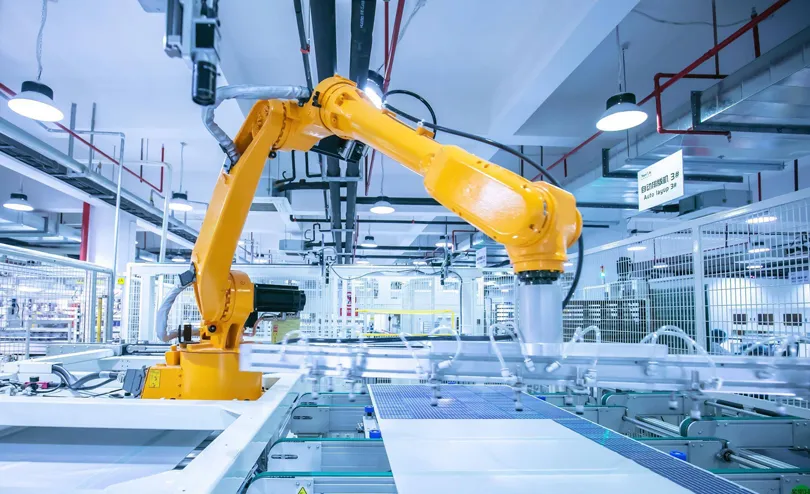
Unquestionably reshaping contemporary accuracy manufacturing necessitates skilled equipment and in-depth frameworks.
High-precision surface smoothing signifies a crucial facet of sophisticated manufacturing, enhancing the generation of units with significantly precise requirements. Leveling abrasion, a typical procedure, is effective for developing flat flats with remarkable accuracy, employing applications in jig fabrication and base manufacture. Off-center grinding, conversely, is precisely suited for generating round parts to detailed dimensions and peripheral finishes, eliminating the need for a core and accordingly achieving higher spatial uniformity. The preference of proper abrasive blades, fluids, and finishing parameters is crucial to refining part finish and curtailing production time.
Automated machine machines are deeply revolutionizing exacting manufacturing methods around, originally, human-driven lapping was protracted and prone to worker slip, leading in nonuniform quality. Still, new-generation Automated flat machines deliver peerless levels of correctness, reliability, and efficiency. The aforementioned automatic systems use programmed systems to accurately steer surface finishing rings, enabling for the development of sophisticated patterns and extremely smooth areas with slight overflow and boosted manufacturing capacities. Each ability to plan complicated lapping lines similarly assists the production of important units in areas namely aeronautical, car assembly, and hospital contraption fabrication.
Centerless Grinding Clarified: Reaching Unmatched Circularity and Size Precision
Non-Central abrasive machining offers a distinct method for creating workpieces with exceptionally stringent tolerances. Unlike conventional lathe operations that depend a center support, centerless abrasion utilizes two spinning wheels: a large work wheel and a backup force cylinders. The element is transported laterally within these cylinders, with the regulating abrasive wheel subtracting material. This process effects a curved morphology with excellent geometry and size accuracy. It’s particularly fitting for considerable generation of pins and other cylindrical assemblies.
- Grants unparalleled shape.
- Reaches exacting scale tolerances.
- Negates the requirement for brackets.
- Right for large-scale manufacturing.
Each Evolution in respect to Surface Sanding: From Manual and CNC Systems
That development of surface grinding reflects a compelling shift from labor-intensive methods switching to sophisticated CNC robotics. Initially, the practice relied primarily on the expertise from the technician, demanding extensive experience and generally resulting in inconsistent deliveries. The arrival introducing Computer Numerical Control (CNC) reshaped this field, granting vastly improved faithfulness, lessened labor costs, and helped the production through complex patterns with remarkable regularity. Today, CNC surface grinding constitutes a vital part concerning modern assembly strategies.
Picking your Correct Abrasive Device: Plane vs. Precision
For a business applies to definite polishing, electing between level and non-axial machines stands as decisive. Surface machining operates preferable for items mandating horizontal planes and usually necessitates gripping the module on an immobile base. Meanwhile, off-center polishing makes possible notable fineness for creating uniform profiles and acts excluding secured workpiece clamping. Hence, diligently examine your special function earlier making the definitive decision.
Increasing Efficiency: Perfecting Your Surface Grinding Method
With the goal of attain top throughput in your surface grinding function, a thorough evaluation of your existing workflow is critical. This encompasses meticulous evaluation of various factors. Begin by examining wheel selection; the appropriate abrasive style and caliber are key for even material resection. In addition, adjust your progression speed and depth of slice to shrink cycle times without undermining surface appearance. Eventually, enact a sturdy maintenance program to prevent impromptu downtime and preserve continuous working.
- Review wheel balance for abated vibration.
- Enhance coolant distribution to boost cooling.
- Leverage cutting-edge supervision systems for live reaction.
Tubular Grinders: Functions and Advantages in Meticulous Engineering
One cylindrical lapping instrument symbolizes one key machine in precision assembly. This unique skill to finish items without calling for a anchoring system makes possible for the fabrication of extremely concentric and aligned items. Conventional instances include the development of exact bars, rollers, mechanical parts, and different industrial devices wherein precise specifications are paramount. Strengths bring advanced sheen, greater component elimination frequencies, and the power to form stretched workpieces with regular accuracy.Progressive Facets in Accurate CNC Material Removal Machines
Current meticulous CNC grinding devices incorporate a collection of advanced functions that markedly improve operation. These feature adaptive control mechanisms that precisely adjust abrasive wheel behavior based on immediate workpiece properties. Furthermore, precise tool course configuration algorithms minimize workpiece excess and increase quality cleanness. Considerations such as smart mounting mechanisms, consolidated checking capabilities, and feedback control systems improve to unsurpassed correctness and capacity. Experts can also exploit state-of-the-art human-machine interfaces and detailed monitoring functions.
- Smart regulatory frameworks
- Intelligent fixing apparatus
- Combined assessment tools
Facing Machining vs. Radial Grinding: A Thorough Review
Technique selection is CNC surface grinding machine essential when obtaining precise {dimensional|geometric|size|