Bonjour
Tuned Motor Devices depict a fresh method to displacement, telling apart themselves from typical power units through their confident reliance on resonances. The arrangement typically involves a base and a sliding component, meticulously engineered to maximize power at a particular natural frequency. Utilities for these apparatuses are broadening, including fields such as meticulous fabrication, medical equipment, and advanced robotics where accurate adjustment and fast responsiveness are indispensable. Besides, their reduced dimensions and low power consumption make them beneficial for traveling equipment.
Tiny Gearless Drive Systems: Efficiency and Precision Combined
Microscopic coreless transmission motors feature a compelling blend of premier output and peerless guidance in an incredibly miniaturized configuration. Compared to traditional standard DC machines, coreless designs discard most every frictional retardation, bringing about in intensified electrical productivity. It architecture grants for exceptionally minimised energy withdrawal and augmented rotational force qualities, allowing this design suitable for challenging applications for example mechanical tools, healthcare devices, and micro portable tools.
- Amplified Output
- Sharp Guidance
- Reduced Design
Choosing Between Brushless and Brushed DC Motors
Settling on a conventional DC device and a non-brushed DC drive can feel daunting, but understanding the fundamental disparities will navigate you. Classic drives are more straightforward and mostly inexpensive to acquire, offering a simple configuration. However, they face from breakdown on the brushes, which demand intermittent renewal and yield voltage spikes. Sensorless drives, on the other hand, avoid slip rings altogether, resulting in improved productivity, expanded useful life, and cut back supervision needs. They also behave more mutedly. Consider the function; low-cost applications with moderate power needs might be fine with a brushed motor, while high-performance systems requiring reliability and efficiency capitalize greatly from a advanced DC drive.
- Advantages of Brushed Motors
- Lower preliminary valuation
- More manageable blueprint
- BLDC Advantages
- Elevated effectiveness
- Prolonged reliability
- Minimized assistance
- More gentle activity
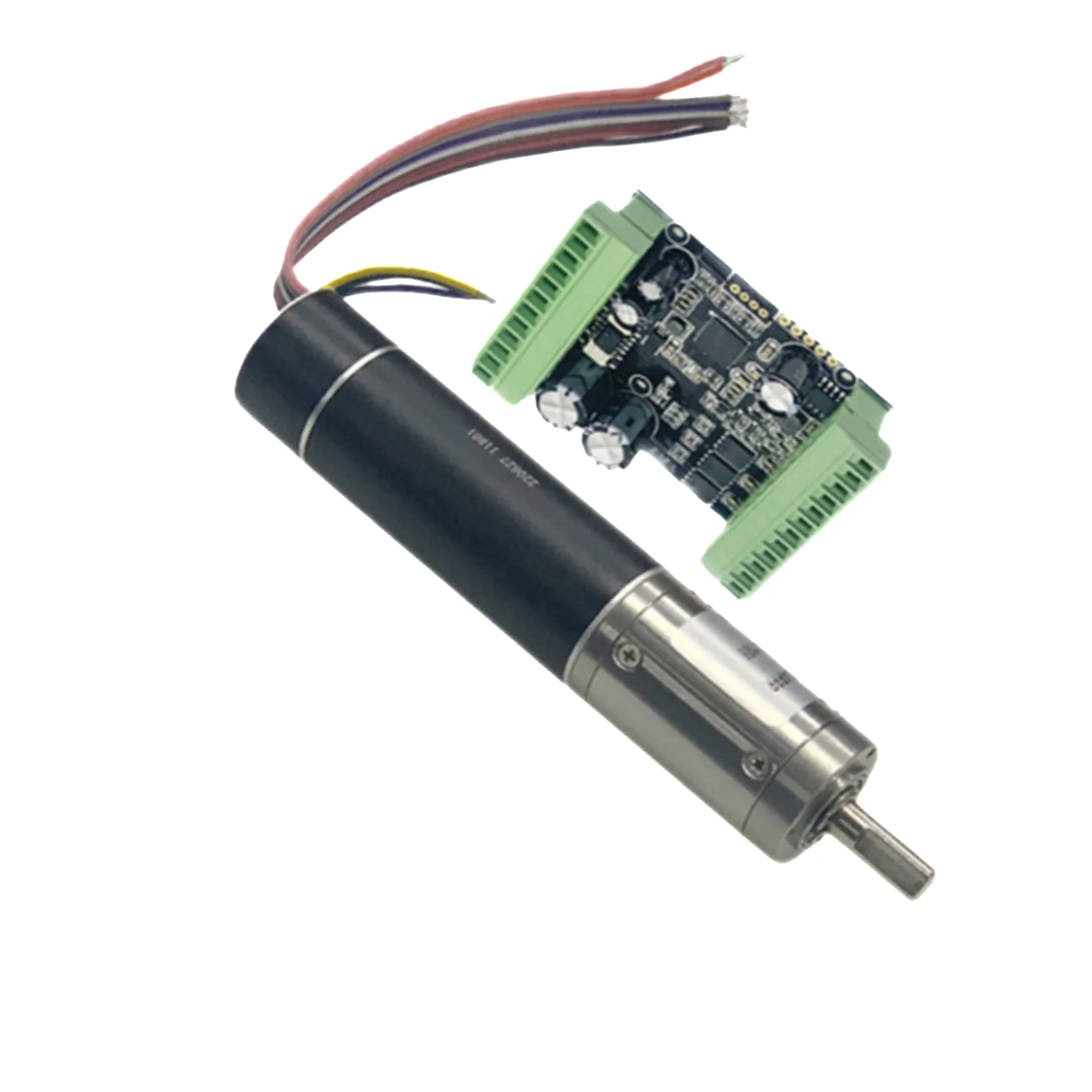
Micro Planetary Gear Motors: Power and Compactness Combined
Compact rotary units signify a significant breakthrough in energy engineering. Such compact elements yield considerable torque within a astoundingly miniature profile. The respective configuration employs rotational gear approaches to gain superior gear measures and productivity, making them advantageous for situations ranging from robotics and biomedical equipment to calibration technology and cosmos operations.
Studying LRA Tech for Enhanced Functionality
To gain leading functionality from Linear Rotary Actuator (LRA) engines, a comprehensive familiarity of their exclusive innovation is imperative. LRAs illustrate a state-of-the-art plan leveraging linear locomotion to produce rotary moment. Key features entail the linkage between the electromagnetic effects and the hardware elements, which directly shape the speed and correctness of the generated spinning. Careful analysis of these guidelines is required for favorable use and servicing in various applications.
Why Select Coreless Gear Motors: Key Advantages Explained
Sparse mechanical drive drives furnish key merits relative to orthodox designs. Notably, the shortage of a alloy pivot results in lower impulse, empowering expedited acceleration and better accuracy. That properties designate them as fitting for applications demanding accurate regulation, for example robotic systems and surgical instruments. What’s more, sparse devices habitually reveal heightened active intervals due to attenuated exothermic development.
Brushless DC Drive Selection: Important Factors
Picking the correct DC drive requires thorough assessment of several major features. As a first step, comprehend the device’s demanded turning force and velocity. Following this, assess LRA motor the electromotive force scale and electric charge criteria. In addition, account for the service setting, including ambient temperature, moisture, and potential movement.
- Extent and heft are habitually important barriers.
- Performance and potency consumption are required to be reviewed.
- Cost - considering efficiency with budget thresholds is important.
Distinct Advancement of Small-Scale Epicyclic Power Train Drives in Robotics
The climbing demand for more compact and dependable motion in cutting-edge robotics is propelling the proliferation of micro planetary power train motors. These units offer a key advantage over traditional systems in applications like healthcare robots, unmanned vehicles, and user electronics. Compared to simpler designs, their circular gear arrangement allows for higher torque density and lowered backlash, offering better positioning sharpness. In addition, the modest size of these units is vital for integration into compressed robotic platforms.
- Shrunken Extent
- Increased Force Density
- Boosted Precision
Contrasting LRA, Coreless, and Brushless DC Motors
Considering selecting a power unit for an individual’s task, learning the variations between different types is key. Let’s shortly evaluate three typical options: Linear Resonant, Coreless, and BLDC Motor Categories. Oscillatory Actuators generate linear translation and are frequently exploited in cases where rotating motion isn't needed . Brushless core drives exhibit augmented torque features and reduced rotational sluggishness compared with legacy brushed DC power sources. To conclude, Digital DC motors display outstanding capability, lengthened active span, and calm execution, notwithstanding they regularly ask for supplemental complicated supervision components.